Le Ja: Hariharan, Amitabh Bhattacharya and Stephen Devassy - When Artists Have the Freedom to Follow an Idea
Some of the most interesting music begins with a simple possibility: what happens when an artist is given the space to create what they genuinely want to create?
Some of the most interesting music begins with a simple possibility: what happens when an artist is given the space to create what they genuinely want to create?
“Le Ja” offers one answer.
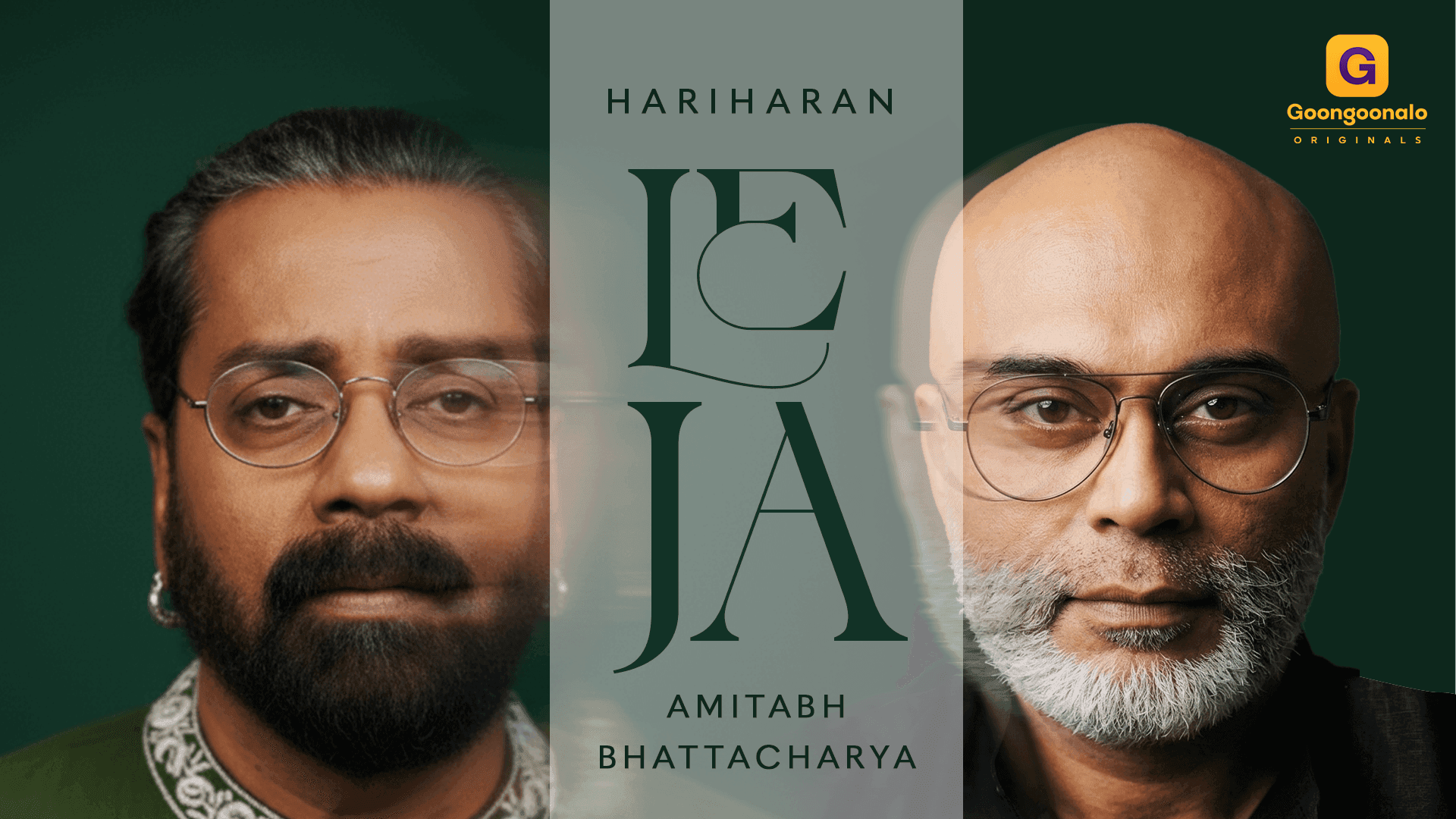
Composed and sung by Hariharan, with lyrics by Amitabh Bhattacharya and production by Stephen Devassy, the song brings together three distinctive creative sensibilities. But its significance within Goongoonalo goes beyond the recording itself.
“Le Ja” represents an idea central to the Goongoonalo Originals label: artists should have room to explore their creativity — and they should continue to have a meaningful stake in what they create.
Hariharan as Both Composer and Voice
Listeners have known Hariharan (https://www.instagram.com/p/DZpml_MlMCv/) across an extraordinary range of musical worlds. With “Le Ja”, there is another dimension worth noticing: the voice performing the song belongs to the person who composed it.
That relationship between composition and performance gives the listener an opportunity to encounter Hariharan not simply as an interpreter of somebody else’s melody, but as the creator shaping the melodic identity of the work itself.
Amitabh Bhattacharya (https://www.instagram.com/p/DZhr25YiTmb/) brings the words to that musical world, while Stephen Devassy’s production helps translate the composition into the finished recording.
The result is a meeting of composition, writing, voice and production — but with the artist’s creative expression remaining at its centre.
What Does Creative Freedom Mean for an Artist?
The phrase “creative freedom” is often used loosely in music.
At its most meaningful, however, it is very simple.
It is the ability to say: this is something I want to make.
Not because a film requires it.
Not because an algorithm predicts it.
Not because it resembles the artist’s previous success.
Simply because the artist believes the music deserves to exist.
That freedom matters to established artists, whose audiences may associate them strongly with particular sounds. It matters equally to emerging artists, who are often told to first establish a commercially recognisable identity before experimenting.
Music becomes richer when creators have room to surprise us.
“Le Ja” provides a natural opportunity to begin that conversation.
But Freedom to Create Is Only Half the Question
There is another practical reality.
Creating a song is one thing. Building everything required to take that song into the world is another.
An independent artist may suddenly need to think about recording, production, rights, distribution, artwork, marketing, promotion and audience discovery.
Effectively, the artist can find themselves having to build a miniature music company around the music.
That raises an important question: Should an artist have to become an entire infrastructure company simply to remain creatively independent?
The Goongoonalo Originals model is being built around a different possibility.
The artist concentrates on creating. Goongoonalo can participate in the ecosystem around that creation — including production, marketing, distribution and discovery — while the creators remain stakeholders in the music they have made.
From Contributor to Stakeholder. This distinction matters.
Within the Goongoonalo Originals model, participating creators can remain economic stakeholders in the original music they help create, sharing in its continuing journey rather than viewing their creative involvement merely as a one-time transaction.
The intention is also to keep creators connected to important decisions concerning how their music is positioned, marketed and promoted.
Ownership, in this sense, is not merely a contractual word.
It changes the relationship between artist and song.
“Creative freedom becomes much more meaningful when the artist also remains connected to the future of what they create. With Goongoonalo Originals, we want artists to have the space to make music they believe in, while we help build the production, distribution, marketing and discovery ecosystem around that music. The artist should not have to build an entire label simply to follow a creative instinct.”
— Sherley Singh, CEO, Goongoonalo
A Different Invitation to Artists. Perhaps that is the larger story behind “Le Ja”.
For listeners, it is a new song to experience. For another musician listening somewhere, it might trigger a completely different thought:
What is the music I have always wanted to make? Perhaps it is an album outside the genre people normally associate with them.
Perhaps it is a composition sitting unfinished on a phone.
Perhaps it is an idea that never fitted a film.
Perhaps an emerging musician simply has something new to say but does not yet have the infrastructure to take it further.
The first question should be creative: What do you want to make?
The mechanics of getting that creation into the world should come afterwards.
That is one of the ideas Goongoonalo Originals hopes to make possible.
“Le Ja” is composed and sung by Hariharan, written by Amitabh Bhattacharya and produced by Stephen Devassy. Discover the song and continue exploring the artists and original music behind it on Goongoonalo.
What Would Artists Create If Infrastructure Wasn’t the First Problem?
There is a question I increasingly find myself thinking about.
How much music never gets made because the artist starts thinking about everything that comes after the music?
Recording. Production. Distribution. Marketing. Rights. Promotion. Artwork. Audience building.
Before long, somebody who simply wanted to create a song is effectively being asked to become an entrepreneur, a marketer, a distributor and a record label.
I don’t think that should be the price of creative independence.
Working around artists has taught me that creativity does not always arrive conveniently packaged for the market.
Sometimes an established singer wants to explore something completely different from the music audiences associate with them.
Sometimes a composer has a body of music that doesn’t belong to a film.
Sometimes an emerging musician has a remarkable idea but absolutely no infrastructure around them.
Those ideas deserve somewhere to go.
I was thinking about this again while listening to “Le Ja”, composed and sung by Hariharan, with lyrics by Amitabh Bhattacharya and production by Stephen Devassy.
What interests me is not only the song.
It is what the existence of original work like this can represent.
Hariharan has a musical identity built over decades. Yet the most exciting thing we can offer an artist of that stature is not another opportunity to reproduce what audiences already know.
It is a room.
Room to compose. Room to experiment. Room to surprise. Room to make something because the artist believes in making it.
And I think the same room should exist for somebody recording their first serious composition.
But freedom without infrastructure can become frustrating very quickly.
That is where I believe the music industry has an opportunity to rethink its relationship with artists.
An artist shouldn’t necessarily have to start a record company to release an album independently.
If someone has the creative vision, there should be ecosystems capable of coming alongside them — helping with production, distribution, marketing and discovery — without taking the creative centre away from the artist.
Ownership is an important part of that equation.
If creators help make something valuable, why should their relationship with it necessarily end when the recording is finished?
I am interested in models where artists remain economically connected to the music they create and continue to participate in its journey.
That creates a very different relationship.
You are no longer simply completing an assignment and walking away
You have helped create something that remains partly yours to nurture, champion and share with audiences.
This is one of the ideas we are exploring through Goongoonalo Originals.
But the bigger idea matters far beyond Goongoonalo.
I would love to see a music culture in which artists spend less time asking:
“How will I release this?”and more time asking:
“What do I really want to create?”
Because somewhere today, there is probably an established artist carrying an album nobody expects from them.
And somewhere else, there is an unknown musician carrying a song nobody has heard yet.
Both deserve the freedom to find out what happens when that idea is given a chance.
Perhaps the future of original music begins there — not with asking what will sell, but with giving artists the confidence to create something worth hearing.
Beyond the Expected: Why Hariharan’s “Le Ja” Makes a Case for Creative Freedom
The longer an artist’s career, the easier it becomes for audiences to decide what that artist is supposed to sound like.
That familiarity is valuable. It can also become a creative boundary.
“Le Ja”, composed and sung by Hariharan, (https://www.instagram.com/p/DZcVmArE73l/) with lyrics by Amitabh Bhattacharya and production by Stephen Devassy, provides an interesting counterpoint to that idea. Rather than viewing an established musical identity as a limitation, the release creates an opportunity to consider something more fundamental: artists need spaces in which they can continue exploring.
Hariharan’s dual role as composer and vocalist is particularly relevant. The listener is not simply hearing his interpretation of a composition; the melodic conception and the vocal expression originate with the same artist.
Amitabh Bhattacharya contributes the lyrics, while Stephen Devassy handles production, bringing together three creators with distinct areas of craft.
But “Le Ja” also belongs to a wider change taking place around independent original music.
For decades, much of India’s mainstream recorded music has been connected to larger entertainment projects, particularly cinema. Independent music has expanded the possibilities available to creators, but independence brings its own practical demands.
An artist wanting to release original work must consider far more than songwriting and recording.
There is distribution. Marketing. Rights management. Promotion. Artwork. Audience discovery. Production logistics.
For emerging musicians especially, those requirements can become a barrier before the creative journey has properly begun.
This is where newer artist-led models become interesting.
“Le Ja” is connected with Goongoonalo Originals, a label model designed around original content and continuing creator participation. The proposition is that artists can focus more deeply on creating while an ecosystem around production, distribution, marketing and discovery supports the work.
Crucially, Goongoonalo’s stated model is intended to keep participating creators economically connected to the original music they make rather than treating creative participation purely as a one-time transaction.
“An artist’s most valuable contribution should be the thing nobody else can provide — their imagination. If we make artists build an entire commercial infrastructure before they can exercise that imagination, we risk losing extraordinary music before it is even created. Our role should be to make creative independence easier, not heavier.”
— Sherley Singh, CEO, Goongoonalo
That philosophy could matter at both ends of the career spectrum.
For an established musician, creative freedom can mean stepping beyond audience expectations. For an emerging artist, it can mean being able to begin without already possessing the resources of a label.
Neither guarantees successful music. Nor should it. Creative freedom is valuable precisely because it permits uncertainty.
Artists should be able to experiment, occasionally fail, change direction and create something audiences did not know they wanted.
That is ultimately what keeps musical culture moving.
The most interesting question raised by projects such as “Le Ja”, then, may not be simply what Hariharan has created.
It may be what other artists could create if the practical machinery surrounding a release became easier to access.
Somewhere between complete dependence on traditional structures and the artist having to do everything alone, a third model is emerging.
It says: bring the music; the ecosystem can be built around it.
For Indian independent music, that could prove to be an important idea.
.png&w=3840&q=75)
.jpg&w=3840&q=75)